What is de minimis in customs?
De minimis is the shipment value below which customs does not collect a charge, because collecting it would cost more than it raises. Two charges can apply, and they often have different thresholds:
- Import duty: a percentage set by product type (its HS code) and sometimes by where it was made.
- Import tax: VAT, GST or similar, at your country's normal rate, usually calculated on the item value plus shipping plus duty.
- Carriers may add a handling or brokerage fee for paying these on your behalf.
Does the 2025 US de minimis change affect parcels shipped from the US?
Mostly no. In 2025 the United States ended its duty-free de minimis treatment for low-value imports, which covers goods entering the US. When we ship a box from Delaware to your country, your country's import rules apply, and the US change does not alter them.
Where it can matter is the other direction: if you send an item back to a US store or seller, that inbound parcel may now face US entry rules. Check with the store before you return anything.
Destination countries have been changing their own rules too. The EU, for example, has agreed to remove its EUR 150 duty exemption for low-value parcels, with a small fixed duty on e-commerce parcels planned from 2026. At the time of writing, November 2026, these reforms are still rolling out, so check the current position before a large order.
What is the de minimis threshold by country in 2026?
These are general figures for personal shipments from the US at the time of writing, November 2026. Specific products, such as alcohol, tobacco and some textiles, can be treated differently, so confirm in our country guides before a big purchase.
| Destination | Duty typically starts above | Import tax notes |
|---|---|---|
| United Kingdom | GBP 135 | 20% VAT typically from the first pound |
| European Union | EUR 150 (exemption being phased out) | VAT from the first euro, at 17% to 27% by country |
| Canada (courier) | CAD 150 | GST/HST and provincial tax above CAD 40 |
| Australia | AUD 1,000 | 10% GST collected on low-value goods |
| New Zealand | NZD 1,000 | 15% GST typically collected on low-value goods |
| United Arab Emirates | AED 1,000 | 5% VAT may apply |
| Saudi Arabia | SAR 1,000 | 15% VAT may apply |
| Singapore | Most goods carry no duty | 9% GST applies |
How much is import tax from the USA to the UK?
For most parcels, VAT at 20% from the first pound, plus duty only when the customs value is above GBP 135. That GBP 135 figure is the UK's de minimis threshold for duty, but there is no matching threshold for VAT, so even a small order usually pays something.
Import duty from the USA to the UK depends on the product's HS code, and goods made in the US are not automatically duty-free. Import fees from the US to the UK can also include a handling or brokerage fee from the carrier that pays the charges for you, so check its terms.
| Customs charges US to UK | When it applies | Who collects it |
|---|---|---|
| VAT at 20% | From the first pound, on most goods | Usually the carrier, before delivery |
| Import duty | Customs value above GBP 135 | Usually the carrier, before delivery |
| Handling or brokerage fee | Set by the carrier | The carrier, with the charges above |
How do you estimate landed cost?
Add the item price and shipping to get the customs value, apply duty if you are over the duty threshold, then apply VAT or GST to the value plus duty. Some countries also include insurance in the customs value.
Worked example for the UK, using an illustrative 12% duty rate (the real rate depends on the product): a jacket costing GBP 160 with GBP 25 of international shipping has a customs value of GBP 185. Because that is over GBP 135, duty applies: GBP 22.20. VAT at 20% on GBP 207.20 adds GBP 41.44. The landed cost is about GBP 248.64 before any carrier fee. A GBP 120 jacket with the same shipping would pay VAT but no duty.
Your Shiponic quote shows estimated duties and taxes before you pay for shipping, so you can check the numbers for your own box.
What happens when your box reaches customs?
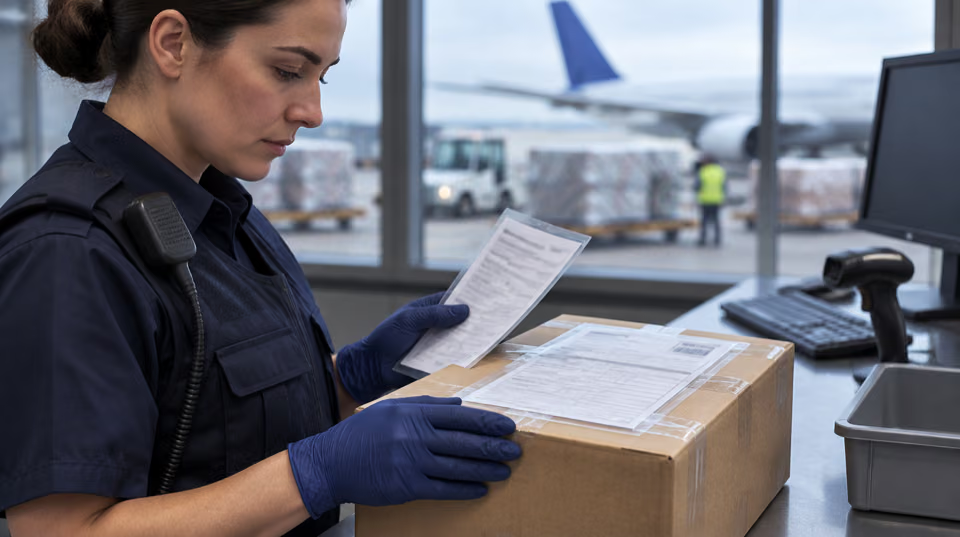
Customs checks the commercial invoice against the parcel, calculates any duty and tax, and the carrier usually pays it on your behalf and then collects it from you. Most carriers send a text or email with a payment link before delivery; some collect at the door. Many also add a handling or brokerage fee for this, so check the carrier's terms for your country.
Most boxes clear in a day or two. Delays usually come from three things: vague descriptions such as gift or clothes, values that look too low for the goods, and items that need a permit, such as some supplements, cosmetics in large quantities or anything with a battery. Our team describes each item clearly on the invoice and declares its real value, which avoids the first two.
If customs contacts you, reply quickly with your store receipt or order confirmation. Unpaid charges usually mean the parcel is held, and after a set period it may be returned or destroyed, so do not ignore a payment request from your carrier. If you are unsure whether a message is genuine, check the tracking number on the carrier's own website or ask our support team.
How can you legally pay less?
Lower the customs value and declare it accurately. In countries that include shipping in the customs value, cheaper shipping means less duty and tax, so consolidation and repackaging both help. Free trade agreements such as CUSMA can reduce duty on goods made in the US, though a product made elsewhere and sold by a US store usually does not qualify.
Never under-declare or split one order to stay under a threshold. Customs may combine split parcels, and false values can lead to fines, seizure or delays on future parcels. We prepare an itemised commercial invoice with real values and clear descriptions for every box, free of charge. Keep your store receipts in case customs asks.